- Analytics
- News and Tools
- Market News
Analytics, News, and Forecasts for CFD Markets: currency news — 01-02-2013.
The dollar fell to its weakest level against the euro in November 2011 on the background data, which showed that the number of people employed in non-agricultural sectors rose in December to 157 thousand, compared with forecasts for the level of 156 thousand
But, at the same time it was announced that the previous month was revised upwards by 41 thousand Meanwhile, the rate for November was revised from 161 thousand to 247 thousand impressive.
The yen fell to the lowest level in two and a half years against the dollar, amid speculation that Prime Minister Abe will choose a new head of the Bank of Japan, which will promote the growth of monetary stimulus.
The New Zealand dollar reached its highest level since August 2008 against the yen after the Governor of the Reserve Bank of New Zealand Graeme Wheeler said that the country should reduce its budget deficit or to resort to an increase in interest rates.
The Canadian dollar weakened against its U.S. counterpart, as market participants are waiting for data on the unemployment rate, which is projected to grown. Note that this report will be presented in the following Friday. However, despite the decline for most of the day, the currency was able to regain some lost ground, which helped the U.S. report on employment.
Economic activity in the U.S. manufacturing sector expanded for the second consecutive month in January, according to a report released by the Institute for Supply Management on Friday, with the index of activity in the sector coming in well above estimates.
The ISM said its purchasing managers index rose to 53.1 in January from a revised 50.2 in December, with a reading above 50 indicating growth in the manufacturing sector.
Economists had expected the index to come in unchanged compared to the 50.7 originally reported for the previous month.
Employment
in the
The report showed that non-farm payroll employment increased by 157,000 jobs in January following an upwardly revised increase of 196,000 jobs in December.
Economists had been expecting employment to increase by about 165,000 jobs compared to the addition of 155,000 jobs originally reported for the previous month.
Despite the continued job growth, the unemployment rate unexpectedly edged up to 7.9 percent in January from 7.8 percent in December. The increase surprised economists, who had expected to unemployment rate to dip to 7.7 percent.
EUR/USD $1.3400, $1.3425, $1.3500
USD/JPY Y90.85, Y91.00, Y91.50, Y92.00
GBP/USD $1.6000
GBP/CHF Chf1.4730
EUR/CHF Chf1.2475
AUD/USD $1.0445, $1.0500, $1.0600
08:30 Switzerland Manufacturing PMI January 49.5 50.5 52.5
08:50 France Manufacturing PMI (finally) January 42.9 42.9 42.9
08:55 Germany Manufacturing PMI (finally) January 48.8 48.8 49.8
09:00 Eurozone Manufacturing PMI (finally) January 47.5 47.5 47.9
09:30 United Kingdom Purchasing Manager Index Manufacturing January 51.4 51.0 50.8
10:00 Eurozone Harmonized CPI, Y/Y (preliminary) January +2.2% +2.2% +2.0%
10:00 Eurozone Unemployment Rate December 11.7% 11.9% 11.7%
The yen depreciated to its weakest level in 2 1/2 years against the dollar and euro amid speculation Prime Minister Shinzo Abe will select a new Bank of Japan governor who will boost monetary stimulus. Japan’s currency headed for 12th weekly decline versus the dollar as a report showed the jobless rate climbed and household spending fell. Japan’s Labor Force Survey showed the nation’s unemployment rate climbed to 4.2 percent in December from 4.1 percent in the previous month. A separate report indicated spending among households fell 0.7 percent in the same period from a year earlier.
The euro strengthened for a fourth day against the greenback as data showed manufacturing in the 17-nation region shrank less in January than earlier estimated. A gauge of manufacturing in the 17-nation euro area rose to 47.9 from 46.1 in December, London-based Markit Economics said today, above an initial estimate of 47.5 on Jan. 24. The reading has been below the 50 level that indicates contraction for 18 months.
Europe’s common currency maintained gains as the European Central Bank said banks will repay 3.5 billion euros of its emergency three-year loans next week. A total of 27 financial institutions will use the second opportunity for early repayment of the initial three-year loan, the Frankfurt-based ECB said in a statement today. Banks returned 137.2 billion euros of long- term funds this week.
The pound fell to a 14-month low against the euro after an industry report showed U.K. manufacturing grew less in January than economists forecast, damping demand for Britain’s currency. Sterling headed for a fourth weekly loss versus the common currency as a European report this week showed economic confidence improved in January, adding to signs the region’s debt crisis is easing. U.K. government bonds fell as stock gains sapped investor appetite for safer assets. Markit Economics and the Chartered Institute of Purchasing and Supply said their gauge of U.K. manufacturing output fell to 50.8 this month from a revised 51.2 in December. Economist forecast a decline to 51. A reading above 50 indicates expansion.
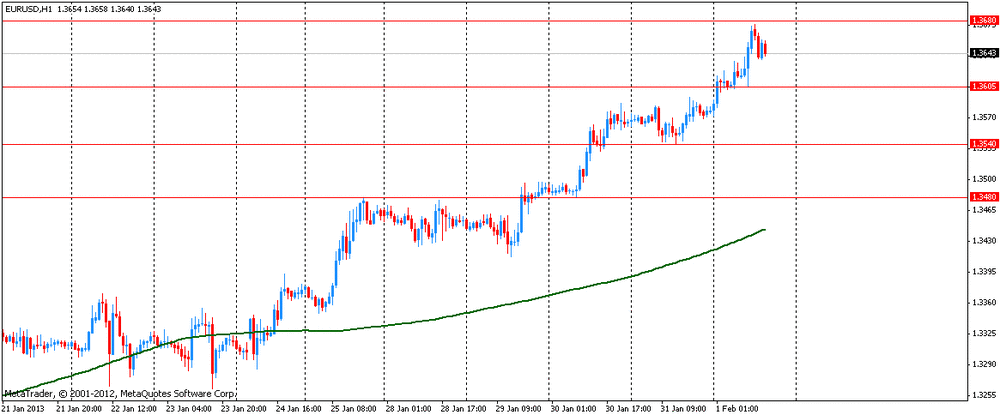
EUR / USD: during the European session, the pair rose to a new high of $ 1.3676
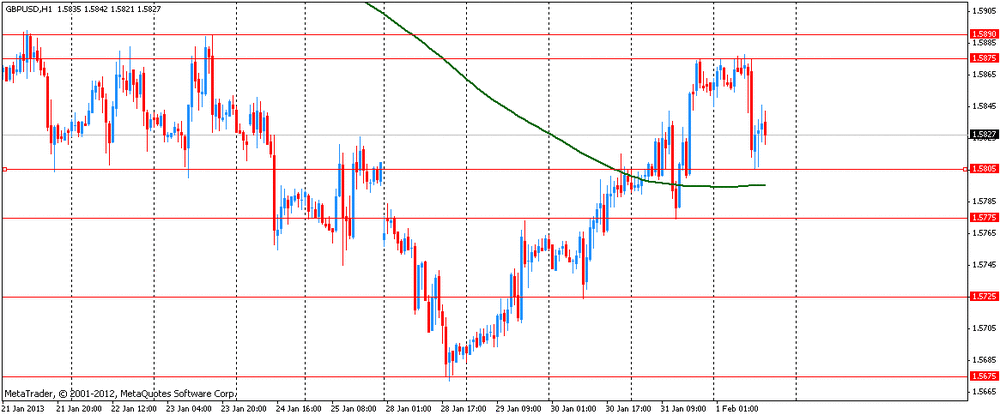
GBP / USD: during the European session the pair updated low of $ 1.5806
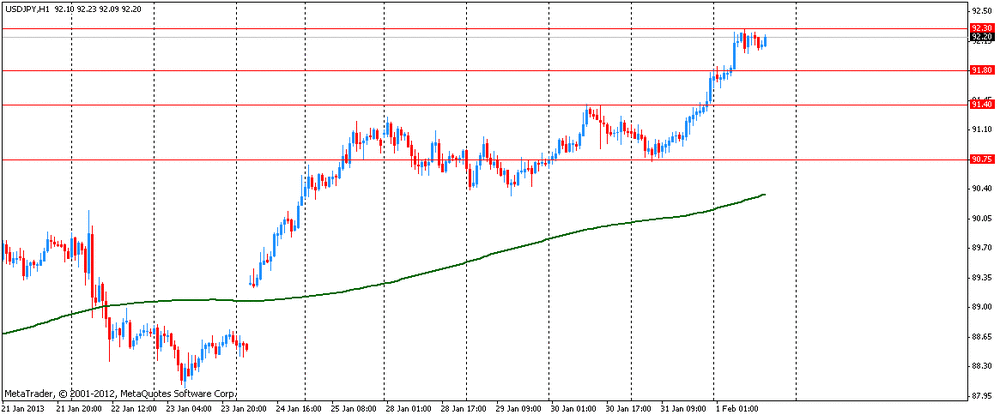
USD / JPY: during the European session the pair rose to a new high of Y92.30
At 13:30 GMT the U.S. unemployment rate for January and change the number of people employed in non-agricultural sectors of the economy for January. At 14:00 GMT the U.S. will index of business activity in the manufacturing sector in January, and 14:55 GMT consumer sentiment index from Reuters / Michigan in January. At 15:00 GMT the U.S. will the manufacturing index of the Institute for Supply Management for January and data on construction spending for December.
EUR/USD
Offers $1.3750, $1.3720/25, $1.3700/10, $1.3675
Bids $1.3610/00, $1.3570, $1.3535/30, $1.3515-00, $1.3485/80
GBP/USD
Offers $1.5950/60, $1.5920/30, $1.5880/95
Bids $1.5800, $1.5785/75, $1.5755/50, $1.5730/20, $1.5710/00
AUD/USD
Offers $1.0500, $1.0480, $1.0465/70, $1.0440/50, $1.0420/30
Bids $1.0360, $1.0350, $1.0330/20, $1.0300, $1.0260/50
EUR/JPY
Offers Y127.50, Y127.00, Y126.50, Y126.30
Bids Y125.50/40, Y125.00, Y124.80/75, Y124.50, Y124.00
USD/JPY
Offers Y93.25, Y93.00, Y92.65/75, Y92.50
Bids Y92.05/00, Y91.90, Y91.65/60, Y91.50, Y91.10/00
EUR/GBP
Offers stg0.8700, stg0.8665, stg0.8650
Bids stg0.8610/00, stg0.8545/40, stg0.8525/20, stg0.8500, stg0.8480, stg0.8465/60
Eurozone inflation slowed unexpectedly in January largely due to a slowdown in energy cost, flash estimate from Eurostat showed Friday.
Inflation fell to 2 percent in January from 2.2 percent in December. Inflation was forecast to remain unchanged 2.2 percent.
Energy prices rose at a slower pace of 3.9 percent after increasing 5.2 percent a month ago. The increase in food, alcohol and tobacco prices remained unchanged at 3.2 percent. Cost of services, at the same time, climbed 1.7 percent compared to 1.8 percent last month.
A separate report showed that the unemployment rate in the 17-nation currency bloc remained unchanged at 11.7 percent in December.
In December, about 18.715 million were unemployed in the euro area. Compared with November, the number of persons unemployed was nearly stable in the euro area.
The number of banks that took part in the second repayment was 27. This leaves the amount outstanding on the first 3-year LTRO at E348.548bln.
The U.K. manufacturing sector continued to expand at the start of the year, albeit at a slower than expected pace, survey data from Markit Economics showed Friday.
The Markit/Chartered Institute of Purchasing & Supply Purchasing Managers' Index came in at 50.8 in January, down from a 15-month high of 51.2 in December.
Also, the reading was below the expected level of 51. Nonetheless, the index remained above the neutral 50.0 mark for the second month running.
Driven by an increase in new orders, manufacturing output expanded at the fastest pace since September 2011.
On the price front, average input prices rose for the fifth successive month in January. Part of the increase in costs was passed on to clients in the form of higher average selling prices.
However, companies continued to exhibit a degree of cost caution with regard to purchasing activity.
Eurozone manufacturing activity contracted less than initially estimated in January, final data from Markit Economics showed Friday.
The Final manufacturing Purchasing Managers Index came in at 47.9 in January, up from 46.1 in December and slightly above the flash estimate of 47.5.
"The Eurozone economic picture continues to brighten, with the final reading of the manufacturing PMI for January coming in ahead of the earlier flash estimate," Chris Williamson, chief economist at Markit said.
The index reading reached the highest level in 11 months, but the sector remained in negative territory for one-and-a-half years. There remained wide disparities between the performances of the member nations, it showed.
Eurozone manufacturing production contracted for the eleventh successive month in January. Incoming new orders, at the same time, fell solidly in January.
Employment continued to decrease, and at the fastest rate since last October. Meanwhile, price pressures remained subdued in January.
EUR/USD $1.3400, $1.3425, $1.3500
USD/JPY Y90.85, Y91.00, Y91.50, Y92.00
GBP/USD $1.6000
GBP/CHF Chf1.4730
EUR/CHF Chf1.2475
AUD/USD $1.0445, $1.0500, $1.0600
The euro rose against the dollar, ending with the sixth month of growth, registering with the longest winning streak in nearly a decade, as risk appetite improved on speculation that the worst days of the crisis of sovereign debt in the euro area is over.
The single currency has reached its highest level since November 2011 after the release of data that showed that retail sales and unemployment fell. Note that the German unemployment unexpectedly fell in January, down to the level of 6.8% to 6.9%. Meanwhile, the number of people out of work fell a seasonally adjusted 16,000 to 2.92 million, while the projected growth would reach 8000. Meanwhile, retail sales in Germany, which are usually quite volatile index in December were worse than expected. In real terms, they fell from the previous month and compared with the same period last year. Retail sales adjusted for seasonal variations, the number of working days and inflation in December fell by 1.7% compared with November.
The dollar index (DXY) fell, registering with the second monthly fall, as a report showed that the number of applications for unemployment benefits rose more than expected. Well as the pressure on the index continues to yesterday's announcement by the Federal Reserve, according to which it was announced that it would continue to buy Treasury and mortgage bonds to stimulate the U.S. economy and reduce unemployment.
We also note that market participants expect the yield data on the number of jobs outside agriculture in the USA, which are considered an indicator of the health of the world's largest economy. Stronger-than-expected data on the number of jobs in the private sector in the U.S., released on Wednesday, raised expectations that the employment report on Friday will also be quite positive.
00:30 Australia Producer price index, q / q IV quarter +0.6% +0.3% +0.2%
00:30 Australia Producer price index, y/y IV quarter +1.1% +1.2% +1.0%
01:00 China Manufacturing PMI January 50.6 51.1 50.4
01:45 China HSBC Manufacturing PMI (finally) January 51.9 52.1 52.3
05:30 Australia RBA Commodity prices, y/y January -8.0% -6.4%
The yen fell to its lowest in 2 1/2 years against the dollar and euro amid speculation Prime Minister Shinzo Abe is nearing selection of a new Bank of Japan governor who will boost monetary stimulus to spur inflation.
Japan’s currency weakened past 92 per dollar after data today showed an increase in the nation’s jobless rate and a decline in household spending, adding to impetus for further easing to bolster growth. Japan’s Labor Force Survey showed the nation’s unemployment rate climbed to 4.2 percent in December from 4.1 percent in the previous month. A separate report indicated spending among households fell 0.7 percent in the same period from a year earlier.
The euro rose to a 14-month high against the greenback before reports that may confirm manufacturing improved in the 17-nation region. The final reading for a gauge of euro zone factory output by Markit Economics will probably show a gain to 47.5 in January from 46.1 in the previous month, according to the median estimate of economists surveyed by Bloomberg News. A level below 50 indicates contraction.
Australia’s dollar fell after factory output in China, the nation’s biggest trading partner, expanded at a slower-than-expected pace. In China, the manufacturing Purchasing Managers’ Index fell to 50.4 last month from 50.6 in December. That compared with economist estimates for a gain to 51. A similar gauge from by HSBC Holdings Plc and Markit rose to 52.3 in January from 51.5 a month earlier.
EUR / USD: during the Asian session, the pair rose to $1.3635.
GBP / USD: during the Asian session, the pair rose to yesterday's high.
USD / JPY: during the Asian session, the pair rose above Y92.00.
There is a full calendar Friday, with data all leading up to the release of the US employment report at 1330GMT, However, ahead of that, there is a full data calendar in Europe, starting at 0800GMT with the release of the French January car registrations. Friday also sees the release of the European final manufacturing PMI data, leading with Spanish data at 0813GMT. This is followed at 0843GMT with the release of Italian data, French data at 0848GMT, German final numbers at 0853GMT and EMU January final manufacturing PMI at 0858GMT. At 1000GMT, EMU December unemployment data and the January flash HICP numbers will be released. At 1100GMT, German Chancellor Angela Merkel gives a statement after meeting with CDU economic council on energy issues, in Berlin, followed at 1315GMT by a speech speech at a presentation of a new euro memorial coin, in Berlin.
(pare/closed(00:00 GMT +02:00)/change, %)
EUR/USD $1,3578 +0,35%
GBP/USD $1,5856 +0,37%
USD/CHF Chf0,9098 -0,10%
USD/JPY Y91,70 +0,65%
EUR/JPY Y124,51 +0,76%
GBP/JPY Y145,40 +1,04%
AUD/USD $1,0423 +0,07%
NZD/USD $0,8387 +0,35%
USD/CAD C$0,9969 -0,43%
00:30 Australia Producer price index, q / q IV quarter +0.6% +0.3%
00:30 Australia Producer price index, y/y IV quarter +1.1% +1.2%
01:00 China Manufacturing PMI January 50.6 51.1
01:45 China HSBC Manufacturing PMI (finally) January 51.9 52.1
05:30 Australia RBA Commodity prices, y/y January -8.0%
08:30 Switzerland Manufacturing PMI January 49.5 50.5
08:50 France Manufacturing PMI (finally) January 42.9 42.9
08:55 Germany Manufacturing PMI (finally) January 48.8 48.8
09:00 Eurozone Manufacturing PMI (finally) January 47.5 47.5
09:30 United Kingdom Purchasing Manager Index Manufacturing January 51.4 51.0
10:00 Eurozone Harmonized CPI, Y/Y (preliminary) January +2.2% +2.2%
10:00 Eurozone Unemployment Rate December 11.8% 11.9%
13:30 U.S. Unemployment Rate January 7.8% 7.8%
13:30 U.S. Nonfarm Payrolls January 155 156
13:30 U.S. Average hourly earnings January +0.3% +0.2%
13:30 U.S. Average workweek January 34.5 34.5
14:00 U.S. Manufacturing PMI (finally) January 56.1 56.1
14:55 U.S. Reuters/Michigan Consumer Sentiment Index (finally) January 71.3 71.4
15:00 U.S. ISM Manufacturing January 50.7 50.8
15:00 U.S. Construction Spending, m/m December -0.3% +0.6%






© 2000-2026. All rights reserved.
This site is managed by Teletrade D.J. LLC 2351 LLC 2022 (Euro House, Richmond Hill Road, Kingstown, VC0100, St. Vincent and the Grenadines).
The information on this website is for informational purposes only and does not constitute any investment advice.
The company does not serve or provide services to customers who are residents of the US, Canada, Iran, The Democratic People's Republic of Korea, Yemen and FATF blacklisted countries.
Making transactions on financial markets with marginal financial instruments opens up wide possibilities and allows investors who are willing to take risks to earn high profits, carrying a potentially high risk of losses at the same time. Therefore you should responsibly approach the issue of choosing the appropriate investment strategy, taking the available resources into account, before starting trading.
Use of the information: full or partial use of materials from this website must always be referenced to TeleTrade as the source of information. Use of the materials on the Internet must be accompanied by a hyperlink to teletrade.org. Automatic import of materials and information from this website is prohibited.
Please contact our PR department if you have any questions or need assistance at pr@teletrade.global.


 Bank
Bank transfers


