- Analytics
- News and Tools
- Market News
Analytics, News, and Forecasts for CFD Markets: currency news — 04-02-2013.
The euro fell the most in two weeks against the dollar as Italian and Spanish bonds slumped amid political turmoil in the euro-area’s third- and fourth-largest economies, damping demand for the shared currency. The 17-nation euro dropped versus the majority of its 16 major peers as Spanish Prime Minister Mariano Rajoy faced calls to resign after newspaper reports alleged he accepted illegal cash payments. A poll showed former Italy Premier Silvio Berlusconi closed the gap on front-runner Pier Luigi Bersani even as he appeals a four-year prison sentence for tax fraud.
Spain’s 10-year bond yield climbed as much as 23 basis points, or 0.23 percentage point, to 5.43 percent, the highest since Dec. 18. Rajoy, who said the allegations published in Spain’s biggest newspaper El Pais are unfounded, travels to Berlin today to meet German Chancellor Angela Merkel.
Italian 10-year yields jumped as much as 15 basis points to 4.47 percent. The additional yield investors demand to hold the securities instead of German bunds increased for a fourth day after Prime Minister Mario Monti said the spread may widen if Berlusconi, who also is standing trial on charges he paid a minor for sex, is elected this month.
Barclays Plc raised its forecasts for the euro against the dollar to take into account gains that pushed the shared currency to the strongest level since November 2011 last week. The euro will drop to $1.32 in six months and $1.28 in a year, higher than from previous estimates of $1.26 and $1.22, strategists Raghav Subbarao and Guillermo Felices in London wrote today in a note to clients.
The yen weakened beyond 93 per dollar for the first time since May 2010. European Central Bank policy makers meet this week. The ECB, which has held its main refinancing rate at 0.75 percent since July, will make no change at its next policy decision on Feb. 7. Central-bank President Mario Draghi may make more dovish remarks at the meeting without the central bank altering policy, according to analysts.
The yen fluctuated against the dollar after a record 12 straight weeks of declines as Prime Minister Shinzo Abe’s administration presses the central bank to ease monetary policy further to beat deflation. Finance Minister Taro Aso said yesterday the government is imitating his Depression-era predecessor, Korekiyo Takahashi, who told the Bank of Japan to underwrite government debt to fund deficit spending.
The pound retreated from its weakest level in 15 months against the euro, as the political turmoil, the growth yield of Spanish and Italian government bonds increased the relative attractiveness of the UK currency. Exchange rate increased, despite the fact that one of the report published today showed that activity in the UK construction sector continued to decline in January, which is fixed for the third month. Economists say that this dynamic is primarily associated with a reduction in the number of new orders. According to the data, the index of business activity in the construction sector was 48.7 in January, unchanged from the previous month. Note that this value is a minimum of six months. The data also showed that the number of new orders in the sector continued to decline in January, registering with the 8th monthly fall. However, the rate of decline was the slowest since October 2012.
EUR/USD $1.3500, $1.3600, $1.3625, $1.3700, $1.3750
USD/JPY Y91.00, Y91.50, Y91.80, Y92.00, Y92.25, Y92.50
GBP/USD $1.5800
AUD/USD $1.0400, $1.0450, $1.0500Data
00:30 Australia Building Permits, m/m December +2.9% +1.1% -4.4%
00:30 Australia Building Permits, y/y December +13.2% +14.9% +9.3%
00:30 Australia ANZ Job Advertisements (MoM) January -3.8% -0.9%
09:30 Eurozone Sentix Investor Confidence February -7.0 -2.2 -3.9
09:30 United Kingdom PMI Construction January 48.7 49.7 48.7
10:00 Eurozone Producer Price Index, MoM December -0.2% -0.2% -0.2%
10:00 Eurozone Producer Price Index (YoY) December +2.1% +2.1% +2.1%
The euro exchange rate fell sharply against the dollar after the yield of Italian and Spanish bonds rose, which was associated with political instability in the third and fourth largest economies of the eurozone, while causing a decrease in demand for the European currency. Also influenced by the dynamics of trading forecasts, published today Barclays Plc. It is learned that the EUR / USD could fall to $ 1.32 in six months and up to $ 1.28 for the year, which was higher than the previous estimate of $ 1.26 and $ 1.22.
The single currency in relation to all but one of the 16 major currencies, amid speculation that the Prime Minister of Spain, Mariano Rajoy may resign after Spanish media reported that he accepted illegal payments. The poll also showed former Prime Minister Silvio Berlusconi has narrowed the gap between the favorite Pier Luigi Bersani, even though the litigation related to tax evasion.
Also today, the statistics agency Eurostat reported that the annual increase in producer prices in the euro area remained unchanged in December at 2.1%. Note that according to the average forecast of economists value of this index was to rise to the level of 2.2%.
The yen weakened to a level of 93 yen to the dollar, which was the first time since May 2010, as many market participants are waiting for a meeting of politicians of the European Central Bank, which will be held later this week.
The pound retreated from its weakest level in 15 months against the euro, as the political turmoil, the growth yield of Spanish and Italian government bonds increased the relative attractiveness of the UK currency. Exchange rate increased, even though the fact that one of the report published today showed that activity in the UK construction sector continued to decline in January, which is fixed for the third month. Economists say that this dynamic is primarily associated with a reduction in the number of new orders. According to the data, the index of business activity in the construction sector was 48.7 in January, unchanged from the previous month. Note that this value is a minimum of six months. The data also showed that the number of new orders in the sector continued to decline in January, registering with the 8th monthly fall. However, the rate of decline was the slowest since October 2012.
EUR/USD: during the European session the pair fell to a new low of $ 1.3550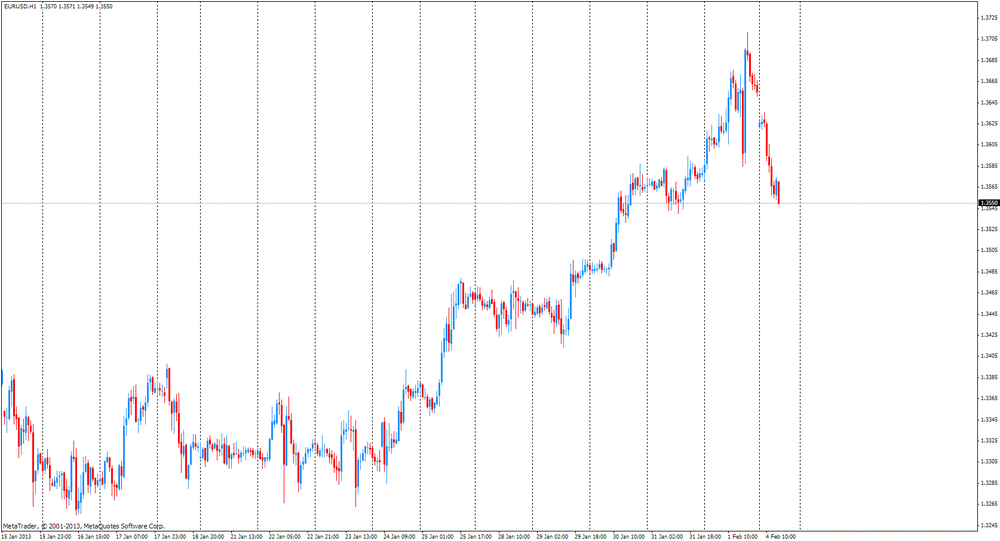
GBP/USD: during the European session the pair rose to $ 1.5740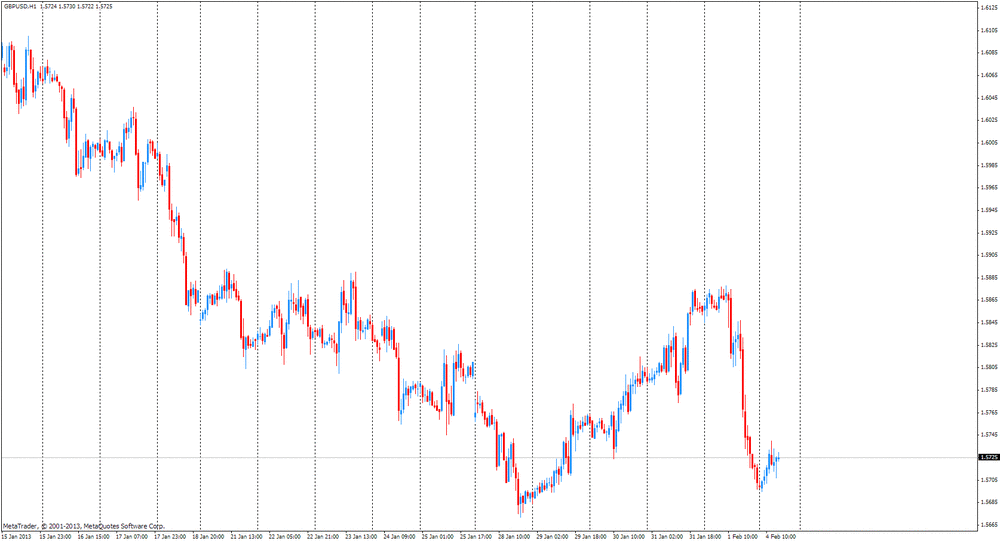
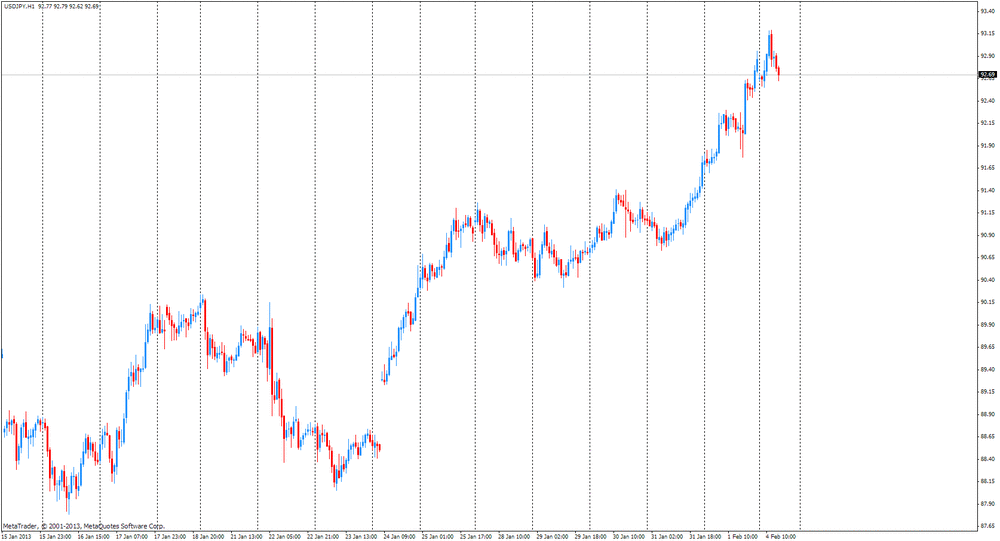
USD/JPY: during the European session the pair rose to a new high of Y93.20, but it is now trading at Y92.69
At 15:00 GMT we will know about the change in the volume of industrial orders in the U.S. in December. At 21:45 GMT New Zealand report on the change in the level of pay in the private sector, excluding overtime for the 4th quarter. At 00:30 GMT will index of activity in the service sector of the AiG Australia in January.
EUR/USD
Orders $1.3750, $1.3720/25, $1.3690/700
Bids $1.3545/40, $1.3530/20, $!.3500, $1.3480
GBP/USD
Orders $1.5895/900, $1.5870/80, $1.5840/50, $1.5800/10, $1.5770/80, $1.5740/50
Bids $1.5680, $1.5650/40, $1.5610/00, $1.5580/70, $1.5550
AUD/USD
Orders $1.0520/30, $1.0500, $1.0480, $1.0465/70, $1.0450
Bids $1.0405/00, $1.0380/70, $1.0360, $1.0350, $1.0330/20, $1.0300
EUR/JPY
Orders Y127.50, Y127.00, Y126.85/90, Y126.40/45
Bids Y125.85/80, Y125.50, Y125.30/20, Y125.00, Y124.80/75, Y124.50
EUR/GBP
Orders stg0.8750, stg0.8720/25, stg0.8700
Bids stg0.8605/00, stg0.8580, stg0.8565/55, stg0.8545/40, stg0.8525/20
USD/JPY
Orders Y94.25, Y93.50, Y93.30/40, Y93.25
Bids Y92.40, Y92.10/00, Y91.90
EUR/USD $1.3500, $1.3600, $1.3625, $1.3700, $1.3750
USD/JPY Y91.00, Y91.50, Y91.80, Y92.00, Y92.25, Y92.50
GBP/USD $1.5800
AUD/USD $1.0400, $1.0450, $1.0500The dollar fell to its weakest level against the euro in November 2011 on the background data, which showed that the number of people employed in non-agricultural sectors rose in December to 157 thousand, compared with forecasts for the level of 156 thousand
But, at the same time it was announced that the previous month was revised upwards by 41 thousand Meanwhile, the rate for November was revised from 161 thousand to 247 thousand impressive.
The yen fell to the lowest level in two and a half years against the dollar, amid speculation that Prime Minister Abe will choose a new head of the Bank of Japan, which will promote the growth of monetary stimulus.
The New Zealand dollar reached its highest level since August 2008 against the yen after the Governor of the Reserve Bank of New Zealand Graeme Wheeler said that the country should reduce its budget deficit or to resort to an increase in interest rates.
The Canadian dollar weakened against its U.S. counterpart, as market participants are waiting for data on the unemployment rate, which is projected to grown. Note that this report will be presented in the following Friday. However, despite the decline for most of the day, the currency was able to regain some lost ground, which helped the U.S. report on employment.00:30 Australia Building Permits, m/m December +2.9% +1.1% -4.4%
00:30 Australia Building Permits, y/y December +13.2% +14.9% +9.3%
00:30 Australia ANZ Job Advertisements (MoM) January -3.8% -0.9%
The yen rose against most major peers as technical indicators signaled the pace of recent declines has been too quick. The Japanese currency’s 14-day relative strength index against the dollar was at 24 on Feb. 1, below the 30 level that some traders see as a signal an asset has fallen too far, too fast and may be due to reverse course. Against the euro, it was 22.
Gains in the yen were limited before reports predicted to show U.S. factory orders increased and European investor confidence improved, damping demand for the refuge assets. Orders to U.S. factories rose in December by the most in three months, economists projected before a Commerce Department report today. Booking rose 2.3 percent after being little changed in November, economists surveyed by Bloomberg News predict. That would follow data from last week showing payrolls in the U.S. expanded by 157,000 in January following a revised 196,000 advance in the prior month and a revised 247,000 surge in November.
Japan’s currency advanced against the greenback after completing on Feb. 1 a record 12 straight weeks of declines, triggered by speculation the Bank of Japan will boost monetary stimulus.
The euro maintained four days of gains versus the dollar before a report predicted to show investor confidence improved in the region.
Australia’s dollar rallied against its peers after a private report showed inflation advanced to the middle of the Reserve Bank of Australia’s goal, adding to the case for policy makers to hold interest rates unchanged tomorrow.
EUR/USD: during the Asian session the pair fell to $ 1.3620.
GBP/USD: during the Asian session, the pair traded in the range of $ 1.5685-10.
USD/JPY: during the Asian session, the pair traded in the range of Y92.45-85.
This week sees a light schedule of releases in the US, but Europe looks forward to meeting and decisions by both the ECB and the Bank of England. Monday sees the week get off to a fairly slow start. The first release of the day sees Spain's January unemployment report cross the wires, with the latest look at Spain's jobless numbers. At 1000GMT, the EMU Dec PPI data will be released. Back on the continent, at 1700GMT, Bundesbank board member Joachim Nagel is slated to speak on the Eurozone debt crisis, in Hamburg. At 1845GMT, the Economic and Monetary Affairs Committee of the European Parliament are due to hold a key vote on OTC derivative trading legislation.
00:30 Australia Building Permits, m/m December +2.9% +1.1%
00:30 Australia Building Permits, y/y December +13.2% +14.9%
00:30 Australia ANZ Job Advertisements (MoM) January -3.8%
09:30 Eurozone Sentix Investor Confidence February -7.0 -2.2
09:30 United Kingdom PMI Construction January 48.7 49.7
10:00 Eurozone Producer Price Index, MoM December -0.2% -0.2%
10:00 Eurozone Producer Price Index (YoY) December +2.1% +2.1%
15:00 U.S. Factory Orders December 0.0% +2.3%
21:45 New Zealand Private Sector Labor Costs (ex. overtime), q/q IV quarter +0.5% +0.5%
22:30 Australia AIG Services Index January 43.2






© 2000-2026. All rights reserved.
This site is managed by Teletrade D.J. LLC 2351 LLC 2022 (Euro House, Richmond Hill Road, Kingstown, VC0100, St. Vincent and the Grenadines).
The information on this website is for informational purposes only and does not constitute any investment advice.
The company does not serve or provide services to customers who are residents of the US, Canada, Iran, The Democratic People's Republic of Korea, Yemen and FATF blacklisted countries.
Making transactions on financial markets with marginal financial instruments opens up wide possibilities and allows investors who are willing to take risks to earn high profits, carrying a potentially high risk of losses at the same time. Therefore you should responsibly approach the issue of choosing the appropriate investment strategy, taking the available resources into account, before starting trading.
Use of the information: full or partial use of materials from this website must always be referenced to TeleTrade as the source of information. Use of the materials on the Internet must be accompanied by a hyperlink to teletrade.org. Automatic import of materials and information from this website is prohibited.
Please contact our PR department if you have any questions or need assistance at pr@teletrade.global.


 Bank
Bank transfers


