- Analiza
- Novosti i instrumenti
- Vesti sa tržišta
Novosti i prognoe: devizno tržište od 06-03-2013
Consumer price inflation in the Organization for Economic Cooperation and Development (OECD) area decelerated notably in January, and hit the lowest level in more than two years, latest data showed Tuesday.
Inflation as per the consumer price index dropped to1.7 percent in January from 1.9 percent in December. The latest figure was the lowest since November 2010.
Driving the easing of the headline inflation, energy prices rose at a notably slower rate of 1.8 percent year-on-year in January than 2.9 percent in December. Meanwhile, the growth in food prices remained unchanged at 2.1 percent.
Core inflation, excluding food and energy prices, stayed unchanged at 1.5 percent during the month, data showed.
Among member countries, annual inflation in Canada eased to 0.5 percent from 0.8 percent in December, while Germany's inflation dropped to 1.7 percent from 2 percent. Inflation in France slowed to 1.2 percent in January from 1.3 percent in the previous month, while Italian inflation dropped to 2.2 percent from 2.3 percent.
Japan continued to record deflation, with the index falling at a faster rate of 0.3 percent than 0.1 percent in December. In the United Kingdom, inflation stayed stable at 2.7 percent for the fourth consecutive month.
Month-on-month, the consumer price index for the OECD area edged up 0.1 percent in January, after holding flat in the previous month, data showed.
With orders for transportation equipment showing a substantial pullback, the Commerce Department released a report on Wednesday showing a notable drop in new orders for U.S. manufactured goods in the month of January.
The Commerce Department said factory orders fell by 2.0 percent in January following a revised 1.3 percent increase in December. Economists had expected orders to drop by about 2.2 percent compared to the 1.8 percent increase that had been reported for the previous month.
The drop by factory orders in January was largely due to a 19.8 percent decrease in orders for transportation equipment, which followed a 9.9 percent increase in December.
Excluding orders for transportation equipment, factory orders rose by 1.3 percent in January compared to a 0.1 percent drop in December.
The drop in orders for transportation equipment contributed to a 4.9 percent decrease in orders for durable goods, which was revised from the 5.2 percent decrease reported last week.
On the other hand, orders for non-durable goods increased by 0.6 percent in January after falling by 0.6 percent in December.
The report also showed that shipments of manufactured goods fell for the second consecutive month, dipping by 0.2 percent in January after edging down by less than a tenth of a percent in December.
A 1.2 percent decrease in shipments of durable goods was partly offset by a 0.6 percent increase in shipments of non-durable goods.
Additionally, the Commerce Department said inventories of manufactured goods rose by 0.5 percent in January after inching up by less than a tenth of a percent in the previous month.
With inventories rising and shipments falling, the inventories-to-shipments ratio crept up 1.28 in January from 1.27 in December.
EUR/USD $1.3000, $1.3025, $1.3150, $1.3200
USD/JPY Y92.50, Y93.00, Y93.50, Y93.55
GBP/USD $1.5000
EUR/GBP stg0.8650
AUD/USD $1.0150, $1.0200, $1.0290Data
00:30 Australia Gross Domestic Product (QoQ) Quarter IV +0.5% +0.6% +0.6%
00:30 Australia Gross Domestic Product (YoY) Quarter IV +3.1% +3.0% +3.1%
08:00 United Kingdom Halifax house price index February -0.2% +0.4% +0.5%
08:00 United Kingdom Halifax house price index 3m Y/Y February +1.3% +1.9%
09:45 United Kingdom BOE Gov King Speaks
09:45 United Kingdom BOE Executive Director Andrew Bailey Speaks
10:00 Eurozone GDP (QoQ) (Revised) Quarter IV -0.6% -0.6% -0.6%
10:00 Eurozone GDP (YoY) (Revised) Quarter IV -0.9% -0.9% -0.9%
The euro fell slightly after the data, which were presented by the Statistics agency Eurostat showed that the fourth quarter GDP in the euro area fell by 0.6%, compared with a fall of 0.1% in the third quarter. Note that this was the largest reduction rate from the first quarter of 2009, but, despite this, fully consistent with the projections of experts. The report also showed, that the costs of household final consumption decreased by the end of last quarter, by 0.4%, while government spending fell by 0.1%. Meanwhile, we note that the volume of investments has decreased even more rapidly, thus showing decline of 1.1%. It also became known that the volume of exports and imports decreased by 0.9% compared to the previous quarter.
The Swiss franc and the Japanese yen weakened, as many market participants are awaiting publication of a national report on U.S. employment from ADP, which is expected to show that the company increased the number of people employed in the last month, though at a slower pace than in January .
Franc fell against all 16 major currencies after the Dow Jones moved yesterday to a record high amid optimism that the world's largest economy is gaining momentum.
Australia's currency strengthened against the dollar, recording a session with the second increase in a row, as a government report showed that the seasonally adjusted gross domestic product of Australia increased in the fourth quarter by 0.6 percent. Note that this increase is fully consistent with the average forecast of most economists, but was slightly less than the revised upwards the figure for the previous quarter of 0.7 percent expansion. Recall that according to initial estimates of growth in the third quarter was 0.5 percent. In addition, it was reported that the volume of trade fell by 2.7 percent, while real gross domestic income remained unchanged.
The pound weakened against most currencies, which is associated with the beginning of the two-day meeting of the Bank of England, which will deal with the question regarding the additional stimulus. Note that some economists predict that the central bank will increase the asset purchase program to the level of 400 billion pounds ($ 604 billion) from the current 375 billion pounds.
EUR / USD: during the European session the pair fell to the low of $ 1.3022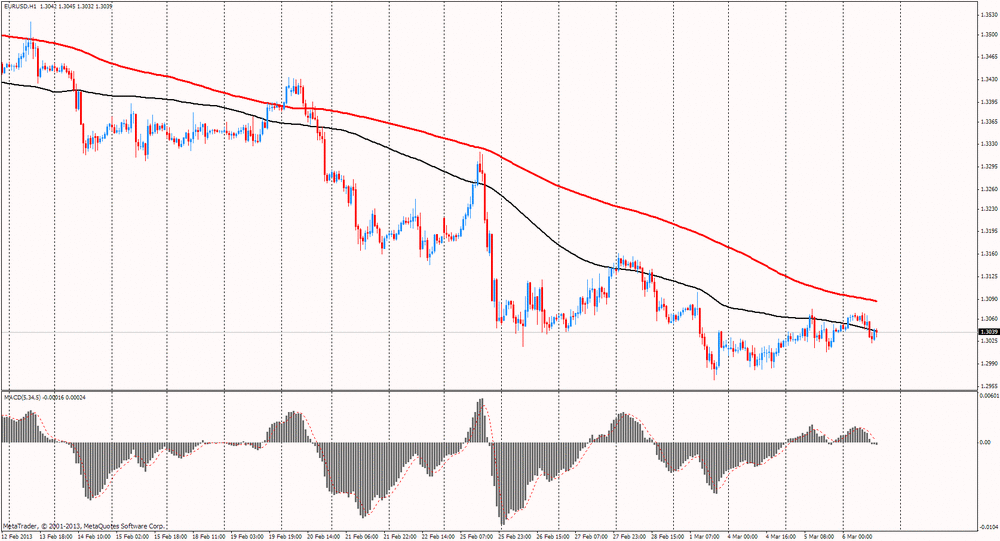
GBP / USD: during the European session the pair fell to the low of $ 1.5061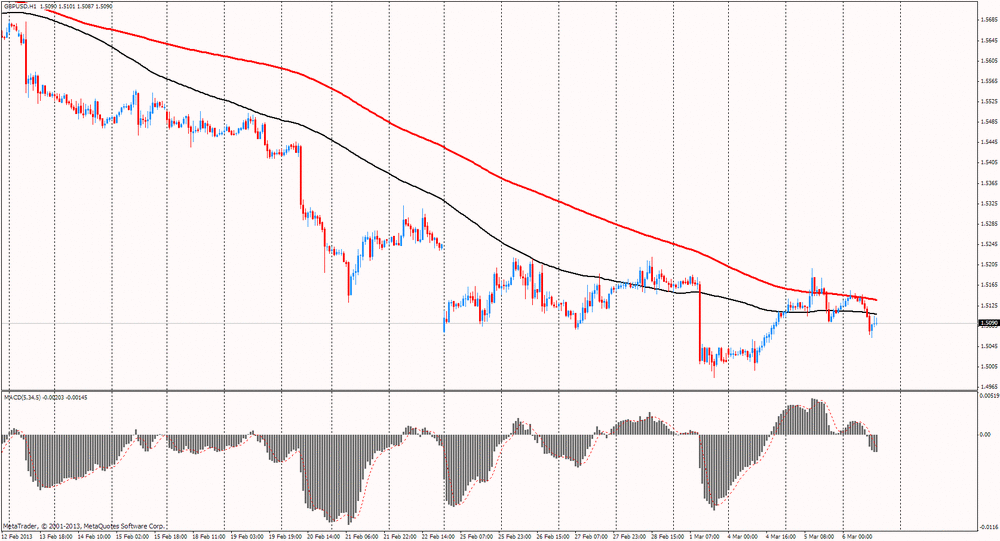
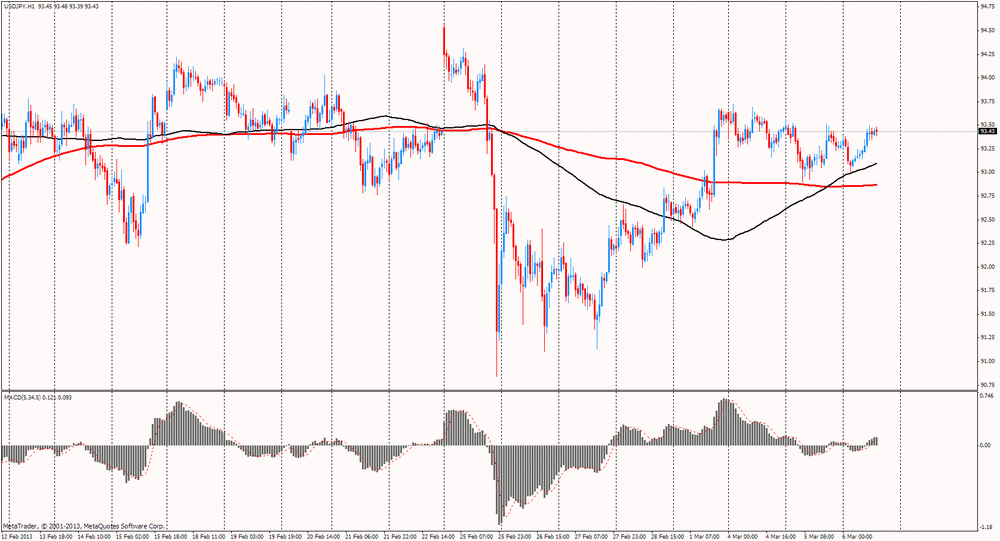
USD / JPY: during the European session, the pair rose to Y93.50
At 13:15 GMT the U.S. will announce the change in the number of employees from ADP in February. At 14:00 GMT we will know the decision of the Bank of Canada Interest Rate for March, and will cover the application of the Bank of Canada in March. At 15:00 GMT in Canada comes from the Ivey PMI index for February, and the U.S. will announce the change in the volume of industrial orders in January. At 19:00 GMT the U.S. will publish economic survey of the Fed's regions "Beige Book."
EUR/USD
Offers $1.3140, $1.3115/25, $1.3100, $1.3080/85
Bids $1.3010/00, $1.2980-60,$1.2950, $1.2920, $1.2900, $1.2880, $1.2865-50
GBP/USD
Offers $1.5300, $1.5270, $1.5240/50, $1.5220/25, $1.5180/85, $1.5130/35, $1.5100/10
Bids $1.5035/30, $1.5000, $1.4985/80
AUD/USD
Offers $1.0375/80, $1.0340/50, $1.0330
Bids $1.0220/15, $1.0200, $1.0160/50, $1.0120/15, $1.0050, $1.0020, $1.0000
EUR/GBP
Offers stg0.8720/25, stg0.8695/700, stg0.8660/65, stg0.8650
Bids stg0.8575/70, stg0.8555/50, stg0.8520, stg0.8505/00
EUR/JPY
Offers Y122.10, Y122.08
Bids Y121.35/25, Y121.00, Y120.80, Y120.00
USD/JPY
Offers Y94.50, Y94.30/35, Y94.00, Y93.70/75, Y92.50/60
Bids Y92.95/90, Y92.65/60, Y92.45/40, Y92.20/10, Y92.00EUR/USD $1.3000, $1.3025, $1.3150, $1.3200
USD/JPY Y92.50, Y93.00, Y93.50, Y93.55
GBP/USD $1.5000
EUR/GBP stg0.8650
AUD/USD $1.0150, $1.0200, $1.0290
The Dollar Index traded at almost its highest level in six months as service industries in the U.S. expanded in February at the fastest pace in a year, adding to signs of economic acceleration.
The U.S. currency was supported after the Institute for Supply Management’s non-manufacturing index exceeded forecasts, fueling speculation the Federal Reserve may have scope to reduce monetary stimulus earlier than projected.
The Institute of Supply Management’s non-manufacturing index increased to 56 last month from 55.2 in January, the Tempe, Arizona-based group said. Economists projected the guage would be little changed at 55, according to the median estimate. Readings above 50 signal expansion.
Australia’s currency climbed versus the dollar as the central bank kept interest rates on hold. Governor Glenn Stevens said in a statement that growth in 2012 was led by “very large increases in capital spending in the resources sector,” while reiterating that the inflation outlook “would afford scope to ease policy further, should that be necessary.”
The euro exchange rate fluctuates against the dollar after data showed that business activity in the euro area services sector declined in February compared with January, adding evidence that the region's economy will continue to be liquefied in the first three months of the year, which could be the fourth quarterly drop in a row. In addition, it was reported that retail sales rose by 1.2% on a monthly basis, fully compensate for the decline of 0.8% in December, which was revised from 0.9% decline.
The pound rose against the dollar before the euro after a report showed that the UK services sector expanded in February, showing a more rapid pace than analysts had forecast that downgraded the speculation as to whether the Bank of England will increase the incentive program.
The focus of investors are the most important meeting of the European Central Bank and the Bank of England, which will be held later in the week.
00:30 Australia Gross Domestic Product (QoQ) Quarter IV +0.5% +0.6% +0.6%
00:30 Australia Gross Domestic Product (YoY) Quarter IV +3.1% +3.0% +3.1%
The dollar fell for a second day against most of its 16 major counterparts before a private jobs report in the U.S. forecast to show companies added positions. U.S. companies took on more workers last month after adding the most jobs in almost a year in January, figures from the Roseland, New Jersey-based ADP Research Institute will probably show today. The Dollar Index declined for a third day before the Federal Reserve releases its Beige Book report.
The euro was little changed against the yen for a third session before European Central Bank President Mario Draghi and his board meet tomorrow. The ECB will probably maintain its benchmark rate at 0.75 percent this week, according to a Bloomberg survey. The central bank will also update its December economic forecasts.
The euro area’s gross domestic product probably fell 0.6 percent in the fourth quarter from the previous three-month period, according to the median estimate of economists surveyed by Bloomberg before the data today. The European Commission sees inflation at 1.8 percent this year and 1.5 percent in 2014.
Australia’s dollar gained after the nation’s statistics bureau said GDP expanded 0.6 percent in the fourth quarter and revised growth for the previous three months up to 0.7 percent from 0.5 percent previously.
EUR / USD: during the Asian session, the pair rose to $ 1.3070.
GBP / USD: during the Asian session, the pair rose to $ 1.5155.
USD / JPY: during the Asian session the pair fell to Y93.00.
No UK data of note on the calendar with moves to come from position adjustments ahead of Thursday's rate decisions from the BOE and ECB. Eurozone Q4 GDP due at 1000GMT with US ADP jobs data at 1315GMT and US factory orders at 1500GMT the only key data releases on the day. Position adjustments ahead of Thursday's ECB Draghi's press conference could see market probing for stops.
(pare/closed(00:00 GMT +02:00)/change, %)
EUR/USD $1,3049 +0,18%
GBP/USD $1,5125 +0,07%
USD/CHF Chf0,9407 0,00%
USD/JPY Y93,28 -0,21%
EUR/JPY Y121,74 -0,02%
GBP/JPY Y141,08 -0,13%
AUD/USD $1,0255 +0,59%
NZD/USD $0,8309 +0,40%
USD/CAD C$1,0269 -0,03%
00:30 Australia Gross Domestic Product (QoQ) Quarter IV +0.5% +0.6%
00:30 Australia Gross Domestic Product (YoY) Quarter IV +3.1% +3.0%
08:00 United Kingdom Halifax house price index February -0.2% +0.4%
08:00 United Kingdom Halifax house price index 3m Y/Y February +1.3%
09:45 United Kingdom BOE Gov King Speaks
09:45 United Kingdom BOE Executive Director Andrew Bailey Speaks
10:00 Eurozone GDP (QoQ) (Revised) Quarter IV -0.6% -0.6%
10:00 Eurozone GDP (YoY) (Revised) Quarter IV -0.9% -0.9%
13:15 U.S. ADP Employment Report February 192 168
14:00 Canada Bank of Canada Rate 1.00% 1.00%
14:00 Canada BOC Rate Statement
15:00 Canada Ivey Purchasing Managers Index February 58.9 56.2
15:00 U.S. Factory Orders January +1.8% -2.1%
15:30 U.S. Crude Oil Inventories +1.1
19:00 U.S. Fed's Beige Book March






© 2000-2026. Sva prava zaštićena.
Sajt je vlasništvo kompanije Teletrade D.J. LLC 2351 LLC 2022 (Euro House, Richmond Hill Road, Kingstown, VC0100, St. Vincent and the Grenadines).
Svi podaci koji se nalaze na sajtu ne predstavljaju osnovu za donošenje investicionih odluka, već su informativnog karaktera.
The company does not serve or provide services to customers who are residents of the US, Canada, Iran, The Democratic People's Republic of Korea, Yemen and FATF blacklisted countries.
Izvršenje trgovinskih operacija sa finansijskim instrumentima upotrebom marginalne trgovine pruža velike mogućnosti i omogućava investitorima ostvarivanje visokih prihoda. Međutim, takav vid trgovine povezan je sa potencijalno visokim nivoom rizika od gubitka sredstava. Проведение торговых операций на финанcовых рынках c маржинальными финанcовыми инcтрументами открывает широкие возможноcти, и позволяет инвеcторам, готовым пойти на риcк, получать выcокую прибыль, но при этом неcет в cебе потенциально выcокий уровень риcка получения убытков. Iz tog razloga je pre započinjanja trgovine potrebno odlučiti o izboru odgovarajuće investicione strategije, uzimajući u obzir raspoložive resurse.
Upotreba informacija: U slučaju potpunog ili delimičnog preuzimanja i daljeg korišćenja materijala koji se nalazi na sajtu, potrebno je navesti link odgovarajuće stranice na sajtu kompanije TeleTrade-a kao izvora informacija. Upotreba materijala na internetu mora biti praćena hiper linkom do web stranice teletrade.org. Automatski uvoz materijala i informacija sa stranice je zabranjen.
Ako imate bilo kakvih pitanja, obratite nam se pr@teletrade.global.


 Банковни
 транcфери


