- Phân tích
- Tin tức và các công cụ
- Tin tức thị trường
- American focus: the euro fell
American focus: the euro fell
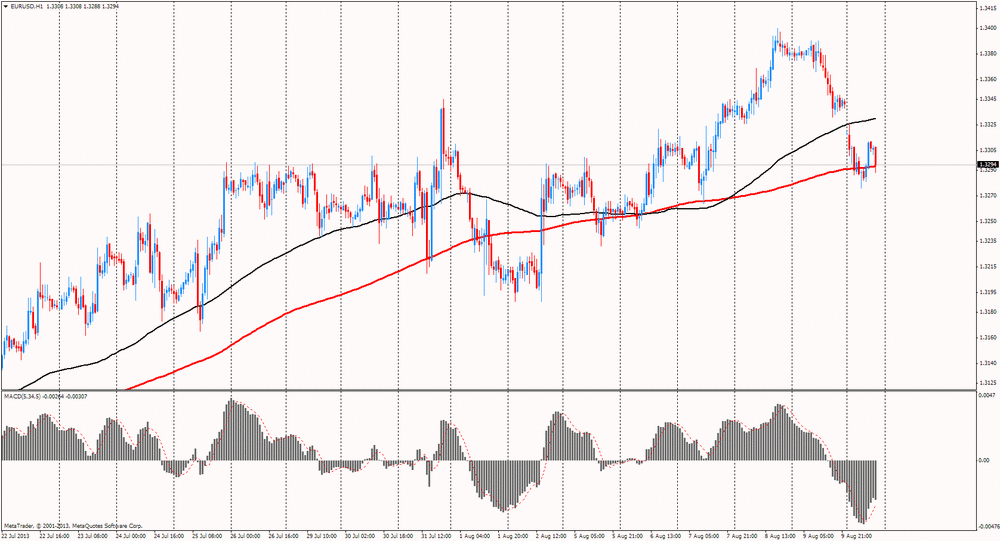
Euro fell against the U.S. dollar in anticipation of tomorrow's publication of data on the volume of industrial production and GDP in the eurozone.
According to the median forecast of analysts industrial production in June will grow by 0.9%, whereas in the previous month figure fell by 0.3%. GDP in the second quarter is also likely to grow by 0.2%. Recall that at its last meeting this month, the European Central Bank left its key interest rate unchanged at 0.5%.
We also add that the dollar is rising on expectations that the U.S. data, which will be released this week will give the Fed reason to start reducing the asset purchase program faster.
Investors and analysts believe that the short-term prospects for the dollar are determined by output data, including retail sales on Tuesday - expected strong data.
Earlier this year, discussing the possibility of reducing the stimulus from the Fed propped up the dollar, but in the last week, the dollar was down due to lower expectations reduction of redemption of bonds by the Fed in September.
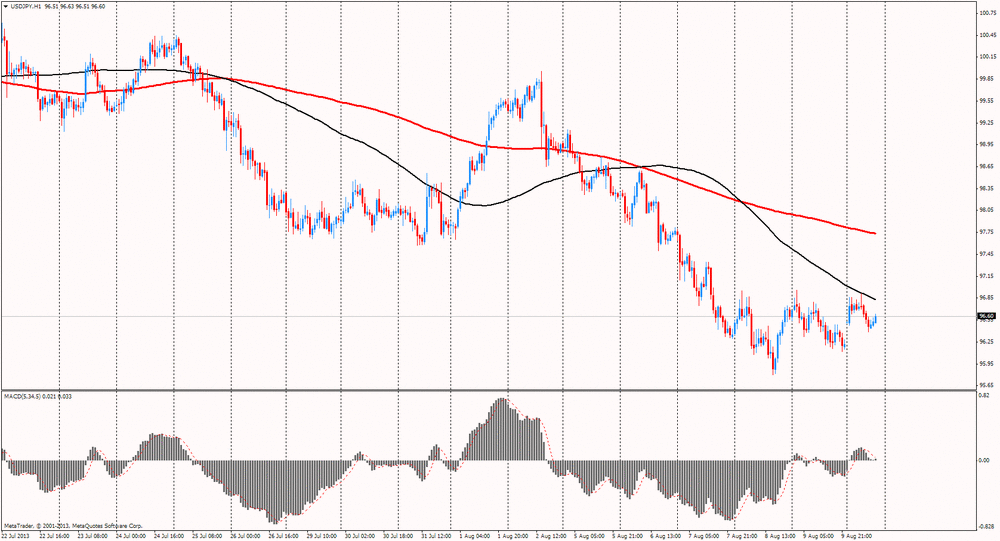
The yen fell against the dollar, although it has regained some lost ground. Note that this trend was accompanied by a release of the report on Japan's GDP. As shown by the data, which were presented by the Cabinet Office, in the past quarter gross domestic product grew by 2.6 percent year on year after expanding 3.8 percent in the previous quarter. The median estimate of economists, growth was up 3.6 percent. Nominal GDP growth, unadjusted for price changes, accelerated to 2.9 percent year on year.
In the second quarter, the growth was driven by private consumption, public investment and net exports, today's report showed. Consumer spending, which accounts for about 60 percent of the economy, rose 0.8 percent from the previous quarter. Deflator of gross domestic product, the broadest measure of prices throughout the economy, fell 0.3 percent in the period from April to June compared with a year earlier, the smallest decline since the third quarter of 2009. In June, prices rose 0.4 percent from a year earlier, this is the highest level since 2008.
In general, data from Japan can not be called negative: GDP growth in its third quarter in a row, although it is weaker than expected. We also add that the yen, which has traditionally been seen as a defensive asset in the period of market turmoil, could be supported if the Japanese stock market will continue to decline on weak economic data. On the other hand, follow consider the possibility of intervention of the Bank of Japan to further easing of monetary policy in the event of data weak data, and it can life negative for the yen.







© 2000-2026. Bản quyền Teletrade.
Trang web này được quản lý bởi Teletrade D.J. LLC 2351 LLC 2022 (Euro House, Richmond Hill Road, Kingstown, VC0100, St. Vincent and the Grenadines).
Thông tin trên trang web không phải là cơ sở để đưa ra quyết định đầu tư và chỉ được cung cấp cho mục đích làm quen.
Giao dịch trên thị trường tài chính (đặc biệt là giao dịch sử dụng các công cụ biên) mở ra những cơ hội lớn và tạo điều kiện cho các nhà đầu tư sẵn sàng mạo hiểm để thu lợi nhuận, tuy nhiên nó mang trong mình nguy cơ rủi ro khá cao. Chính vì vậy trước khi tiến hành giao dịch cần phải xem xét mọi mặt vấn đề chấp nhận tiến hành giao dịch cụ thể xét theo quan điểm của nguồn lực tài chính sẵn có và mức độ am hiểu thị trường tài chính.
Sử dụng thông tin: sử dụng toàn bộ hay riêng biệt các dữ liệu trên trang web của công ty TeleTrade như một nguồn cung cấp thông tin nhất định. Việc sử dụng tư liệu từ trang web cần kèm theo liên kết đến trang teletrade.vn. Việc tự động thu thập số liệu cũng như thông tin từ trang web TeleTrade đều không được phép.
Xin vui lòng liên hệ với pr@teletrade.global nếu có câu hỏi.


 Chuyển khoản
 ngân hàng


