- Phân tích
- Tin tức và các công cụ
- Tin tức thị trường
- American focus : the pound has appreciated strongly against the U.S. dollar
American focus : the pound has appreciated strongly against the U.S. dollar
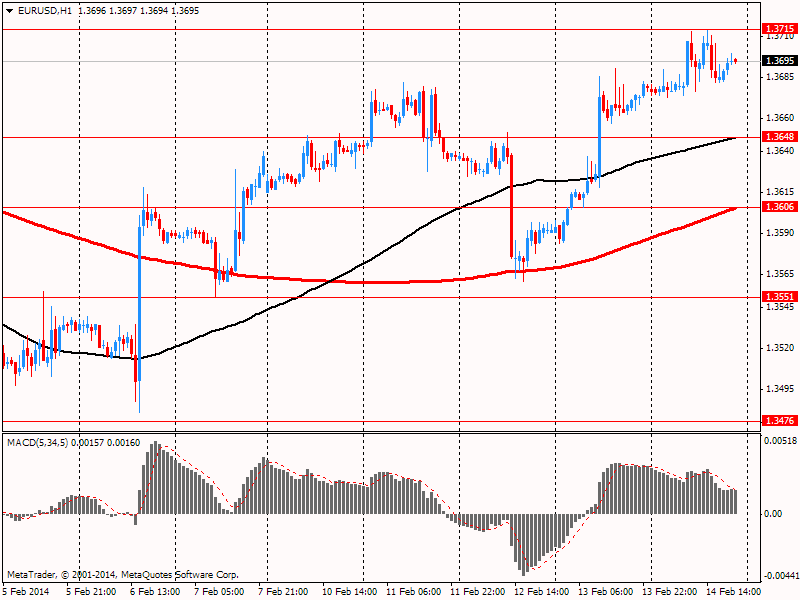
Rate of the euro retreated from the maximum values against the dollar, which was achieved after the release of Eurozone GDP , but continues to trade with a slight increase . Pressure on the currency was the U.S. data , which showed that import prices rose a second straight month in January by 0.1 percent after increasing 0.2 percent in December. In January, higher non-fuel prices offset lower fuel prices . Export prices also rose in January by 0.2 percent after rising 0.4 percent in December . January's growth was accompanied by higher non-fuel prices , while the increase in December was due to rising fuel prices . Despite the increase , the overall import prices decreased by 1.5 percent for the year ending in January.
In addition , the decline was due to the publication of the preliminary results of the study, which were presented to Thomson-Reuters and the Michigan Institute . They showed that in February, U.S. consumers feel about the economy and how it was recorded last month. According to preliminary February consumer sentiment index remained at the final reading of 81.2 in January . It is worth noting that according to the average estimates of experts , the index was down compared to the January to reach a value of 80.6 .
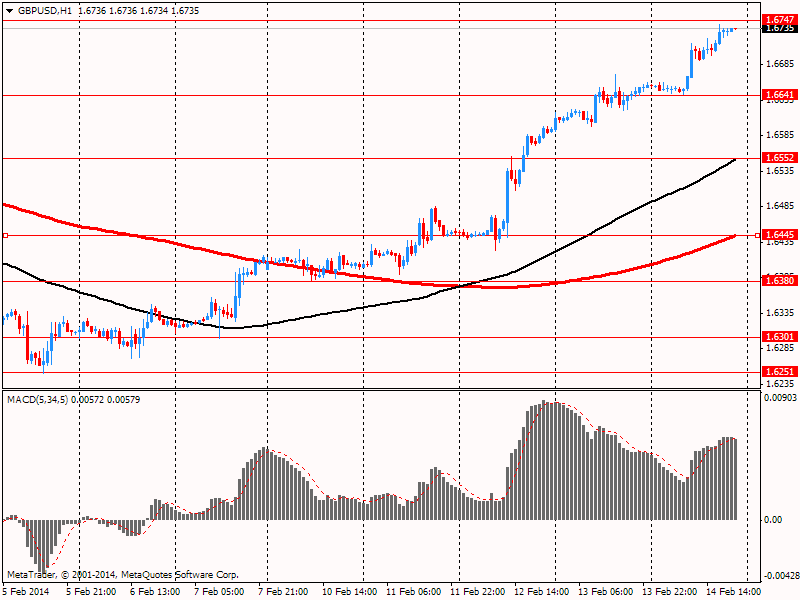
Pound was up against the U.S. dollar , reaching maximum values in nearly two years . Most of the rally pound associated with expectations that the Central Bank will raise rates sooner than previously thought. Strategists note that departure from the Bank of England " transparency policy " allowed to revise forecasts for rate increase for shorter periods . However, next week is expected to publish the IFA protocol , which will reflect a unanimous vote, and the CPI at the target level of 2% as a reminder that needed a lot of time ( experts remain forecast Q3 . 2015 with increasing risk in the 1st half of 2015 ) . In the labor market , the focus will be price increases on wages as a leading indicator of future inflation . Anemic wage growth may also reduce rate hike expectations .
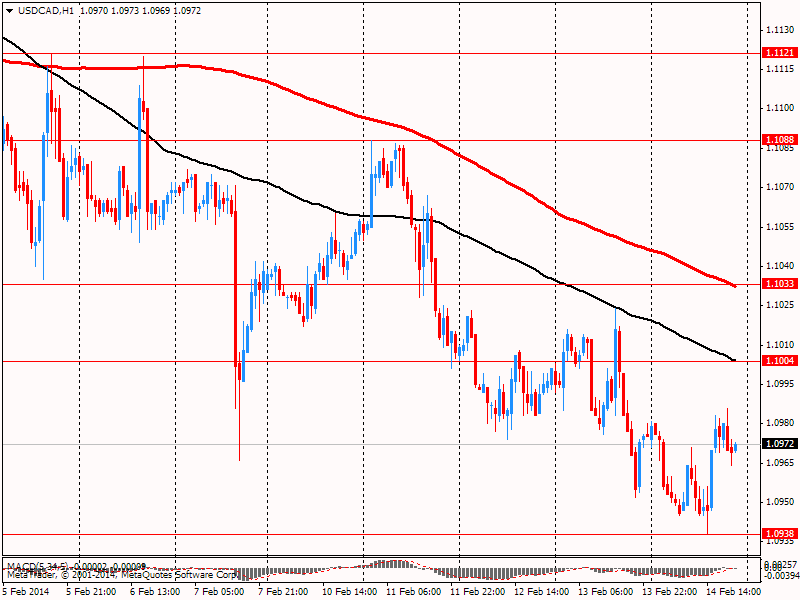
The Canadian dollar fell sharply against the U.S. dollar after data showed that Canadian supply industry in the manufacturing sector fell unexpectedly in December , showing the biggest monthly decline in eight months , amid weak demand for aircraft , vehicles and metals. This was reported by Statistics Canada on Friday .
Industrial sales fell 0.9 % on a monthly basis to 49.87 billion Canadian dollars ( $ 45.55 billion ) , while market expectations were at 0.3% growth . In volume terms, the shipments index fell 1.9 % , the largest decline during the year.
Meanwhile, data on industrial supplies for November were revised downward and now showed that sales rose by only 0.5 % per month, or half the original estimates an increase of 1.0%.







© 2000-2026. Bản quyền Teletrade.
Trang web này được quản lý bởi Teletrade D.J. LLC 2351 LLC 2022 (Euro House, Richmond Hill Road, Kingstown, VC0100, St. Vincent and the Grenadines).
Thông tin trên trang web không phải là cơ sở để đưa ra quyết định đầu tư và chỉ được cung cấp cho mục đích làm quen.
Giao dịch trên thị trường tài chính (đặc biệt là giao dịch sử dụng các công cụ biên) mở ra những cơ hội lớn và tạo điều kiện cho các nhà đầu tư sẵn sàng mạo hiểm để thu lợi nhuận, tuy nhiên nó mang trong mình nguy cơ rủi ro khá cao. Chính vì vậy trước khi tiến hành giao dịch cần phải xem xét mọi mặt vấn đề chấp nhận tiến hành giao dịch cụ thể xét theo quan điểm của nguồn lực tài chính sẵn có và mức độ am hiểu thị trường tài chính.
Sử dụng thông tin: sử dụng toàn bộ hay riêng biệt các dữ liệu trên trang web của công ty TeleTrade như một nguồn cung cấp thông tin nhất định. Việc sử dụng tư liệu từ trang web cần kèm theo liên kết đến trang teletrade.vn. Việc tự động thu thập số liệu cũng như thông tin từ trang web TeleTrade đều không được phép.
Xin vui lòng liên hệ với pr@teletrade.global nếu có câu hỏi.


 Chuyển khoản
 ngân hàng


