- Phân tích
- Tin tức và các công cụ
- Tin tức thị trường
- American focus: the dollar continued to strengthen against the Swiss franc
American focus: the dollar continued to strengthen against the Swiss franc
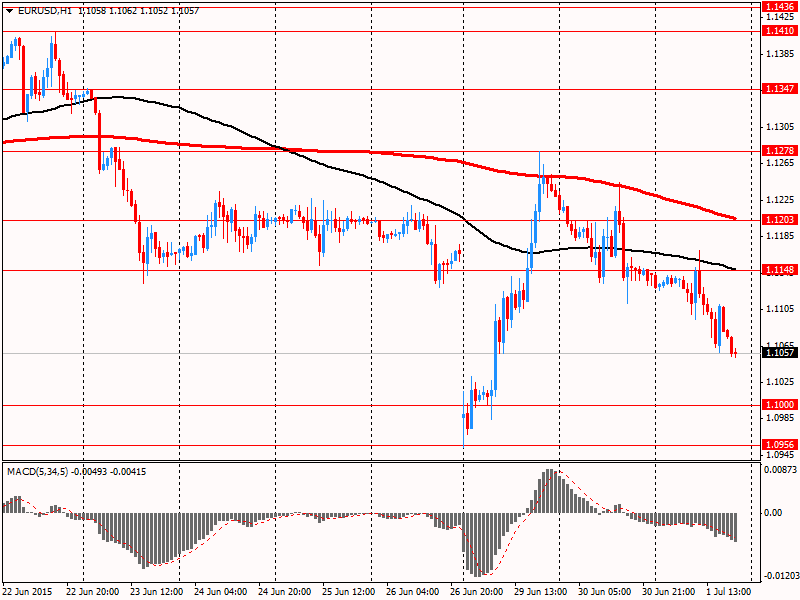
The dollar has appreciated significantly against the euro, breaking the mark of $ 1.1100, which was caused by the publication of positive statistics on the US and the fading optimism about the resolution of the Greek crisis. As part of his live televised prime Tsipras reiterated that the referendum will take place on Sunday, saying the vote "against" is a necessary step for an agreement on more favorable terms. Yesterday the IMF confirmed that Greece had not repaid the payment of $ 1.538 billion. Euros, which marked the first seventy years of the fund, when a country with a developed economy defaulted on its obligations. Greece default puts it on a par with countries such as Afghanistan, Haiti and Zimbabwe, which are also not paid on time debt to the IMF.
With regard to the data in the Automatic Data Processing (ADP) said: employment in the US private sector has grown stronger in June than in May, while the increase was more than the expectations of experts. According to a report last month, the number of employees increased by 237 thousand. Man compared with a revised upward index for May at the level of 203 thousand. (Originally reported 201 thousand.). According to forecasts of the value of this indicator was to reach 217 thousand.
Meanwhile, data from the Institute for Supply Management (ISM) showed in June manufacturing activity in the US has improved, beating forecasts of a slight improvement. PMI index for the US manufacturing in June was 53.5 points versus 52.8 points in May. The latter value was higher than the estimates of experts - is expected to increase to 53.1 points.
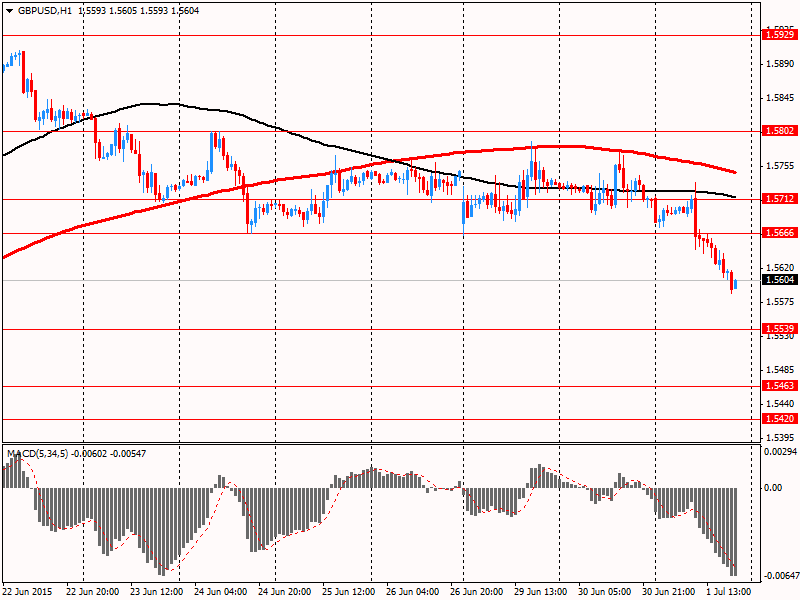
The pound depreciated significantly against the US dollar, by updating the two-week minimum. Pressure on the pound was weaker data on the manufacturing PMI Britain, and optimistic figures for the United States, which led to a general strengthening of the dollar. Earlier reports said the British manufacturing sector expanded twenty-seventh consecutive month in June, although the pace of growth unexpectedly slowed to the weakest in 26 months due to reduction in the rate of growth of production and new orders. The seasonally adjusted purchasing managers' index from Markit / CIPS fell to 51.4 in June from 51.9 in May, which was revised down from 52. Economists had expected the index to improve to 52.5. The value of PMI above 50 indicates expansion in the sector. The survey also showed that the increase in production in the second quarter, on average, was the weakest since the first three months of 2013.
Meanwhile, US data have shown that the volume of construction costs increased by the end of May, exceeding the forecasts of experts, and reached its highest level in a little more than 6.5 years. This was reported in the Ministry of Trade. According to the report, in May construction spending rose by 0.8 percent, reaching 1.04 trillion $. on an annualized basis. It is worth emphasizing the last value was the highest since October 2008. Meanwhile, the increase in spending in April was revised downward - to 2.1 percent from 2.2 percent. Economists forecast that spending rose by 0.6 percent. The Ministry of Commerce noted that the May change was supported by the growth of spending in the private sector (0.9 per cent, the maximum rate in June). Meanwhile, the cost of private housing construction rose by 0.3 percent. Spending on private non-residential construction projects rose by 1.5 percent to its highest level since December 2008.
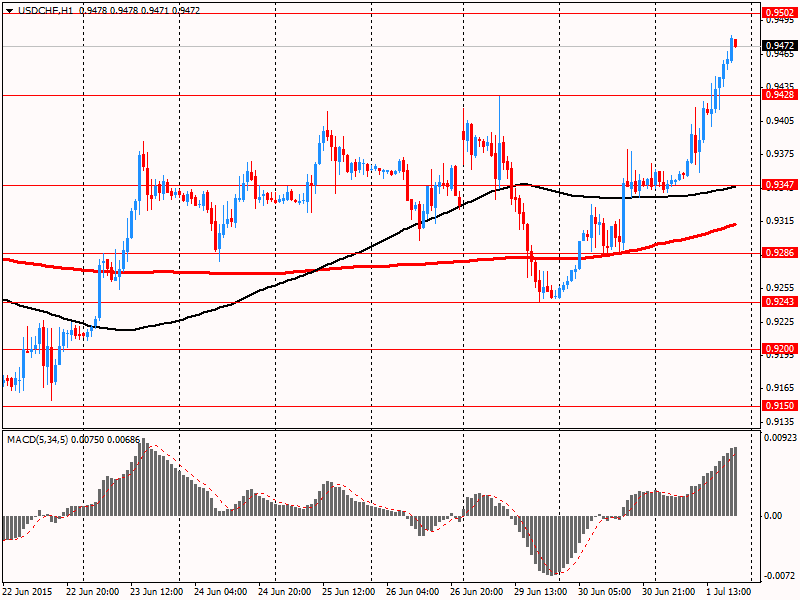
The Swiss franc fell against the US dollar, approaching to the lowest since June 5. In the course of trade affected by these PMI, which were worse than expected, as well as fears of another SNB intervention in the case of the further growth of the franc. Recall manufacturing activity in Switzerland has stabilized in June after declining for five months. Purchasing Managers' Index rose to procure.ch from 50 in June from 49.4 in May. The value indicates a neutral level of activity performance. It was the highest score since December, when the index was 53.6. The expected value was 50.1. Six months after the rejection of the minimum exchange rate of the Swiss National Bank in mid-January, the decline in industrial pulse stopped. Production increased for the third month in a row in June, the index rose by 3.1 points to 54.8. Stocks of purchases in June remained virtually unchanged compared to May, while the delivery times of suppliers rose again in June, but only with a weak pulse. The sub-index of the order book decreased slightly by 0.3 points to 51.1 in June. The sub-index of employment rose for the first time after six months of falling. The index reached 41.6 points compared to 40.7 in May.







© 2000-2026. Bản quyền Teletrade.
Trang web này được quản lý bởi Teletrade D.J. LLC 2351 LLC 2022 (Euro House, Richmond Hill Road, Kingstown, VC0100, St. Vincent and the Grenadines).
Thông tin trên trang web không phải là cơ sở để đưa ra quyết định đầu tư và chỉ được cung cấp cho mục đích làm quen.
Giao dịch trên thị trường tài chính (đặc biệt là giao dịch sử dụng các công cụ biên) mở ra những cơ hội lớn và tạo điều kiện cho các nhà đầu tư sẵn sàng mạo hiểm để thu lợi nhuận, tuy nhiên nó mang trong mình nguy cơ rủi ro khá cao. Chính vì vậy trước khi tiến hành giao dịch cần phải xem xét mọi mặt vấn đề chấp nhận tiến hành giao dịch cụ thể xét theo quan điểm của nguồn lực tài chính sẵn có và mức độ am hiểu thị trường tài chính.
Sử dụng thông tin: sử dụng toàn bộ hay riêng biệt các dữ liệu trên trang web của công ty TeleTrade như một nguồn cung cấp thông tin nhất định. Việc sử dụng tư liệu từ trang web cần kèm theo liên kết đến trang teletrade.vn. Việc tự động thu thập số liệu cũng như thông tin từ trang web TeleTrade đều không được phép.
Xin vui lòng liên hệ với pr@teletrade.global nếu có câu hỏi.


 Chuyển khoản
 ngân hàng


