- Phân tích
- Tin tức và các công cụ
- Tin tức thị trường
- Asian session review: US dollar continues to decline
Asian session review: US dollar continues to decline
During the Asian session, the US dollar continued to decline against other major currencies, as yesterday's preliminary data showed that labor productivity in the United States continued to decline this spring to record third quarterly drop in a row, which could jeopardize the acceleration of wage growth and the economy as a whole in the coming years. This was stated by the Ministry of Labour.
The data showed that the level of labor productivity in the agricultural sector - the gauge of production of goods and services for one hour- decreased in the 2nd quarter by 0.5% compared to the first quarter. The reason for this change has been a more rapid growth in hours worked than in output. Recall that in the first quarter productivity fell by 0.6%.
Also today positive data on orders for engineering products, and the index of activity in the Japanese service.
Orders for Japanese machine building products increased by 8.3% in June, higher than economists' forecast of 3.1%. In May the decline was -1.4%.
The index of activity in the service sector, published by the Ministry of Economy, Trade and Industry of Japan, increased by 0.8%, higher than analysts' expectations of +0.3% in June. The index of activity in the services sector reflects the state of Japan's domestic service sector, including information and communications, electricity, gas heating and water supply, services, transport, wholesale and retail trade, finance and insurance, and social security. Typically, a high value of the index is a positive factor for the Japanese currency.
The Australian dollar rose against the weakening of the US currency, as well as positive data on the index of consumer confidence. The consumer confidence index in Australia published by the Faculty of Economics and Commerce at the University of Melbourne, grew by 2% in August, after a decline of 3% in July. This indicator reflects the level of public confidence in the economy by means of ratings respondents into categories such as personal financial situation in the past year and the outlook for next year, expectations about the economic situation in the 1 and 5 year term, as well as the current consumer climate in terms of households readiness to commit large purchases. In general, high levels are considered to be a positive factor for the Australian currency. Westpac survey was conducted during the first four days of August.
Also Today the head of the RBA Glenn Stevens said the central bank's inflation target is flexible, and inflation may remain below target for some time.
Stevens also said that the leadership of the central bank, whose task is to balance the risks in the economy, discussed the risks associated with the preservation of very low interest rates.
"Given the low interest rates around the world, it would be strange to think that Australia will not follow the example of other central banks," - said Stevens and added - "You can not rely solely on interest rates in an effort to accelerate economic growth"
Also the head of the RBA stated the need to increase the efforts to accelerate the growth of the country's GDP.
Earlier, the number of mortgage loans in Australia increased by 1.2% in June, below economists' forecast of 2.3%. The value from May was revised from -1% to -0.8%
Report on mortgages, published by the Australian Bureau of Statistics shows the number of approved housing loans. It also traces the development trend in the housing market in Australia, and the level of consumer confidence, as large loans to purchase real estate are not taken into account. The high value of the index is a positive factor for the Australian currency.
Also, the Australian Bureau of Statistics reported that the volume of approved home loans linked to investments, increased by 3.2% compared to May, when the growth was recorded at 3.9%.
The Australian Bureau of Statistics report shows that the growth of investment loans remained stable at the level of 0.3-0.4% per month, so a bit limited, but not slowing further.
Today's data suggest that financing flows in the housing market continues.
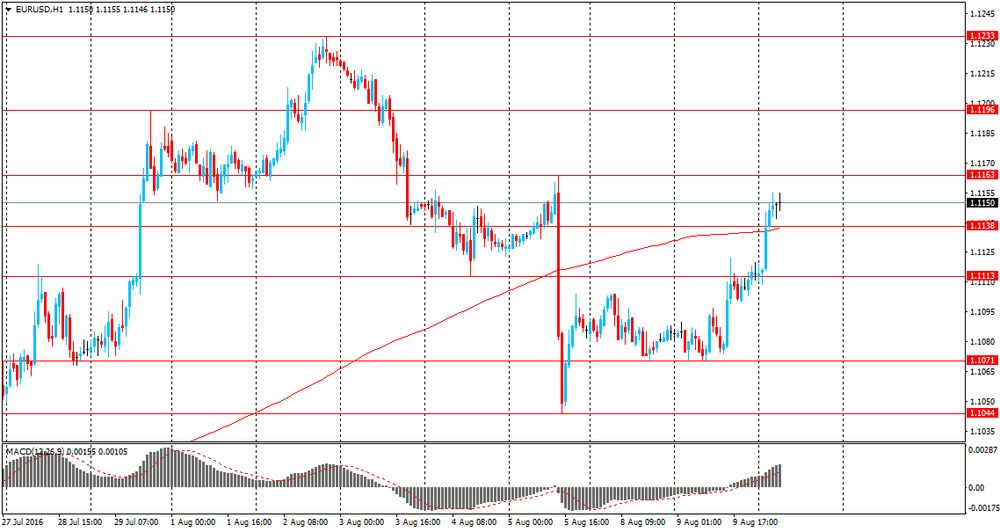
EUR / USD: during the Asian session, the pair was trading in the $ 1.1110-45 range
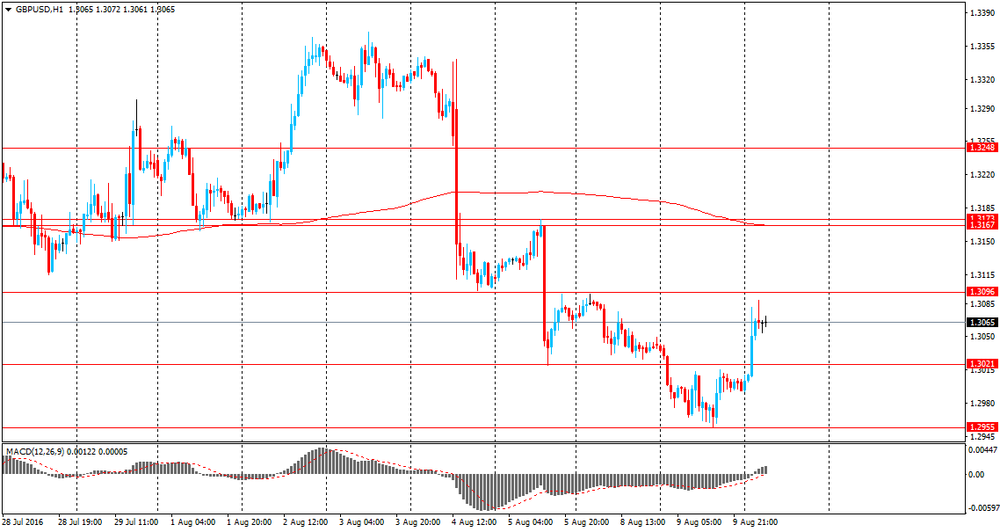
GBP / USD: during the Asian session, the pair is trading in the $ 1.2990-1.3050 range
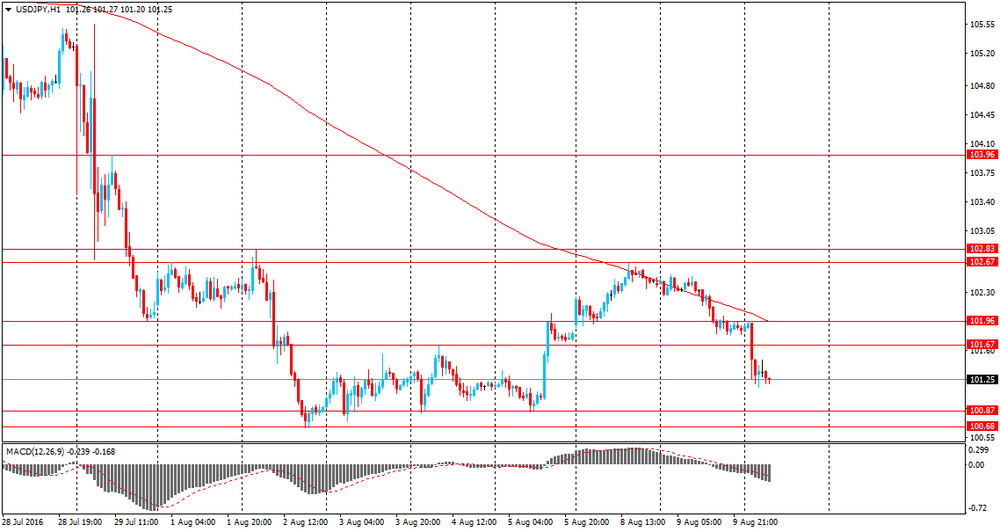
USD / JPY: during the Asian session, the pair was trading in the Y101.10-101.40 range







© 2000-2026. Bản quyền Teletrade.
Trang web này được quản lý bởi Teletrade D.J. LLC 2351 LLC 2022 (Euro House, Richmond Hill Road, Kingstown, VC0100, St. Vincent and the Grenadines).
Thông tin trên trang web không phải là cơ sở để đưa ra quyết định đầu tư và chỉ được cung cấp cho mục đích làm quen.
Giao dịch trên thị trường tài chính (đặc biệt là giao dịch sử dụng các công cụ biên) mở ra những cơ hội lớn và tạo điều kiện cho các nhà đầu tư sẵn sàng mạo hiểm để thu lợi nhuận, tuy nhiên nó mang trong mình nguy cơ rủi ro khá cao. Chính vì vậy trước khi tiến hành giao dịch cần phải xem xét mọi mặt vấn đề chấp nhận tiến hành giao dịch cụ thể xét theo quan điểm của nguồn lực tài chính sẵn có và mức độ am hiểu thị trường tài chính.
Sử dụng thông tin: sử dụng toàn bộ hay riêng biệt các dữ liệu trên trang web của công ty TeleTrade như một nguồn cung cấp thông tin nhất định. Việc sử dụng tư liệu từ trang web cần kèm theo liên kết đến trang teletrade.vn. Việc tự động thu thập số liệu cũng như thông tin từ trang web TeleTrade đều không được phép.
Xin vui lòng liên hệ với pr@teletrade.global nếu có câu hỏi.


 Chuyển khoản
 ngân hàng


